← On a small screen, scroll the diagram horizontally. →
01 /
Pack and deal
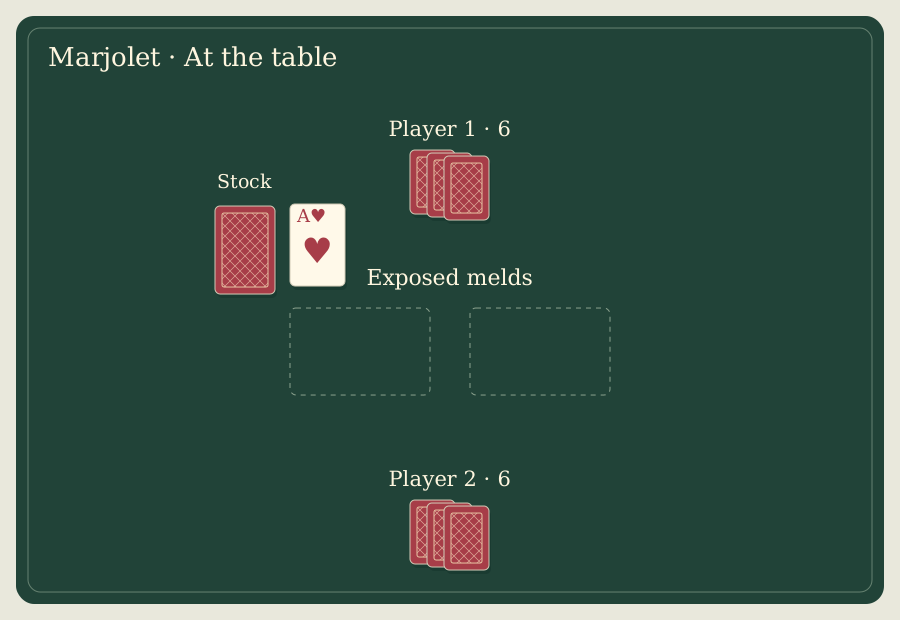
For 2 players use 32 cards, 7 through ace, ranked A, 10, K, Q, J, 9, 8, 7. Choose the first dealer randomly; thereafter alternate. Shuffle, let the opponent cut and deal 6 each. Our procedural agreement deals 3 then 3, opponent first. Expose the next card as trump, placing the remaining 19 face down across it. The indicator remains part of the drawing stock.
02 /
Draw first, then play a strict ending
Non-dealer leads freely. While stock remains, the response may be any card, without following suit or trying to win. Highest trump wins, otherwise highest of the led suit. The winner collects the trick, may declare any eligible melds before drawing, draws first and leads next; the loser draws second. Meld cards remain exposed in front of their owner but are still part of the hand and may be played normally.
After trick 10, the winner draws the final hidden card and the loser takes the indicator. The loser receives 10 points for this event. Now gather exposed melds into hand: no new melds are allowed, but recorded points remain. In the last 6 tricks, follow suit and overtake if possible; if void, trump if able, otherwise discard. Winner leads next. There is no voluntary early stock closure in this profile.
03 /
Melds and the marjolet
After a trick win while the stock is open, expose and score any new combinations still held: 4 aces score 100, 4 tens 80, 4 kings 60, 4 queens 40. Four jacks score nothing. Same-suit K–Q scores 20, or 40 in trump. The trump jack is the marjolet: paired with the trump queen it scores 40, with any other queen 20. There is no sequence bonus and no special Q♠–J♦ bezique.
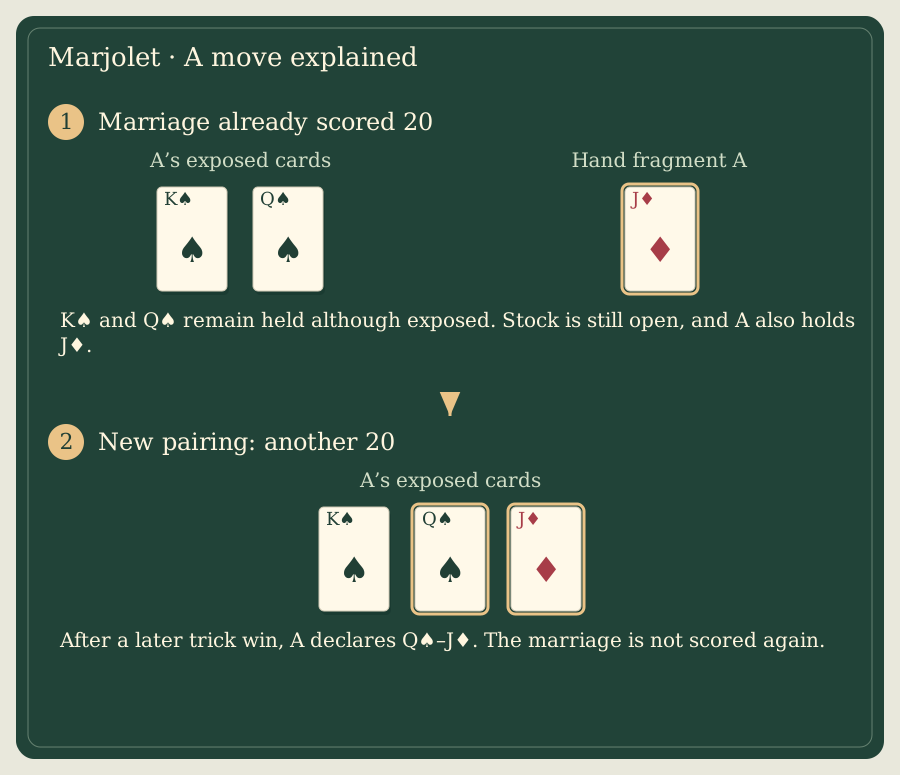
A card can serve in different types of meld on later trick wins. In particular, a queen may marry its king and later meet the marjolet. The marjolet may meet each different queen, but cannot repeat the same pairing. Our explicit bookkeeping convention records each physical marriage, set and jack–queen pairing once; merely lifting and replacing exposed cards never scores again. Played or captured cards cannot be added to a held meld.
04 /
Dix, captured cards and victory
If the indicator is 7 of trump, dealer scores 10. Otherwise its holder can exchange that seven for the indicator after winning a trick and before drawing, for 10. If not exchanged, playing the seven scores 10 whether it wins or loses. To avoid ambiguous repeat claims, our explicit dix convention counts the physical seven only once in the deal, including an initial dealer award; the returned indicator cannot earn another bonus later.
Each captured ace or ten scores 10, giving 80 across the pack. The absolute last trick scores 10. Taking all the last 6 tricks adds another 50, so that ending yields 60 in bonuses including the last trick. The earlier indicator-draw bonus is independent. Add these amounts and all melds to the running totals.
The goal is 500 across deals. Our stated finish convention completes the current deal, then awards victory to the higher total if either reached the goal. If both totals are equal above the target, continue with alternating dealers until they differ. Equal results below the goal simply continue; there is no carryover pot.
05 /
The same queen, two opportunities
Diamonds are trumps. After winning a trick you expose K♠–Q♠ for 20. On a later win, while both Q♠ and J♦ are still yours, announce their marjolet pairing for another 20. That produces 40. A later Q♦–J♦ pairing can add 40, but repeating Q♠–J♦ cannot. The jack may stay exposed through these turns, unless played to a trick.
← On a small screen, scroll the diagram horizontally. →
06 /
Context and corrected sources
Marjolet is documented as a western French member of the marriage-game family, related to Bezique. John McLeod’s correction of Fosdick’s description cites French rulebooks to distinguish the scoring tens from Bezique’s scoring jacks, and to assign the drawing bonus to the loser. This textual history is firmer than claiming an exact inventor or year. Old copies of the uncorrected page may differ; the selected table above is deliberate.
Common questions
Can I score several new melds after a trick?+
Yes in this profile, while the stock remains open and the required cards are still yours.
Does the winner of the final drawing trick get the special ten?+
No. Its loser draws the indicator and receives that bonus.
Do four jacks score?+
No. Four tens score in Marjolet; scoring jacks belongs to Bezique.