← On a small screen, scroll the diagram horizontally. →
01 /
History and selected rules
Go Fish collects books of equal ranks and is related to Authors and family packs. These sources do not establish the exact inventor of the standard-card version. Select Bicycle play for 2–5 until every book is complete, rather than stopping when stock first empties. Use 52 cards without jokers; suit and rank hierarchy do not affect requests.
02 /
Setup and deal
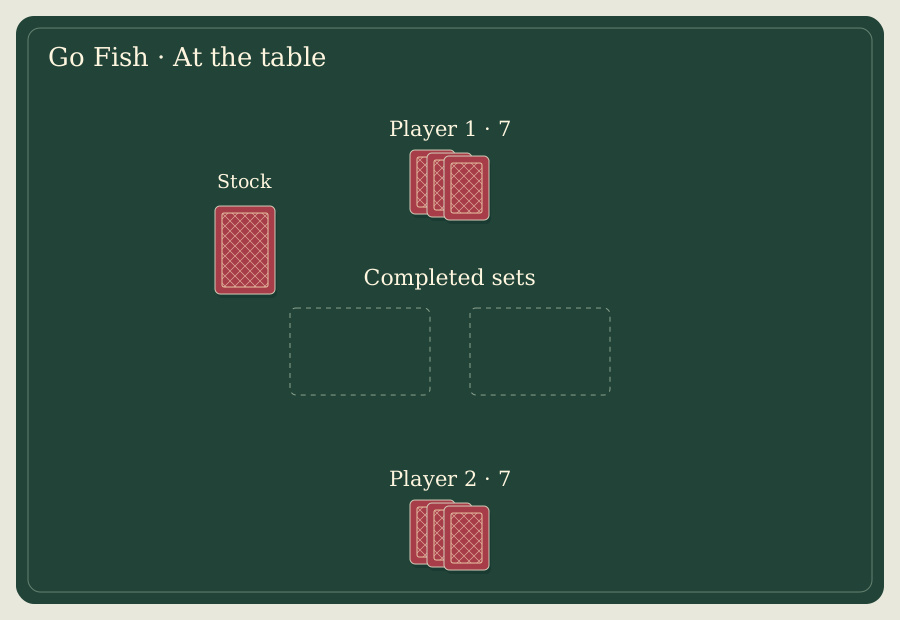
Choose a dealer randomly. Deal singly clockwise: 7 each with 2–3 players, 5 each with 4–5. Remaining cards form a closed stock. Immediately expose and set aside any complete books. Dealer’s left begins; turns pass left. Conceal hands and keep completed books visible.
03 /
Playing a hand
Name an opponent holding cards and a rank you hold at least one of. They must give every card of that rank, not just one. A successful request lets you ask anyone again for any held rank. Never lie about absence. On collecting all 4, expose and set them aside immediately and continue.
If none, they say “go fish”: draw stock’s top card. If it is the requested rank, show it and continue; otherwise conceal it and pass left. With empty stock an unsuccessful request simply passes the turn. With no cards on your turn, draw one and request its rank; without stock, leave play. If making a book empties your hand, use the same replenishment before continuing requests.
04 /
Ending and result
End when all 13 books are exposed. Score 1 per book; most wins, tied highest share victory. Completed books cannot be requested. For another game rotate dealer left; there is no penalty for a mistaken guess about someone’s hand.
05 /
Worked example
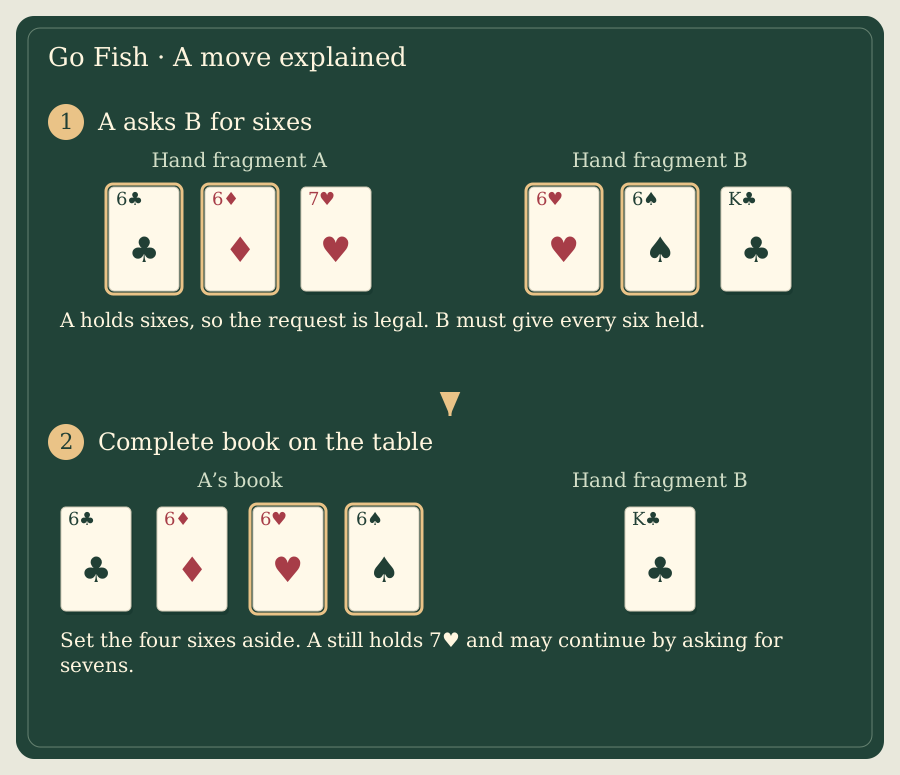
You hold 6♣–6♦ and ask someone holding 6♥–6♠ for sixes. They give both. Lay down the book and ask for another held rank; you cannot keep asking for sixes now removed from your hand.
← On a small screen, scroll the diagram horizontally. →
Common questions
May I ask for a rank I do not hold?+
No. You must hold at least one card of the requested rank.